Akkermansia muciniphila
The barrier-first probiotic for people who understand that gut strength, metabolic resilience, immune balance, and long-term vitality begin at the intestinal lining.
120 capsules • 60 servings • Shelf-stable • Dairy-free • Double Wood
Order Now
Supplement Facts
How to Use
Videos
Research
FAQs
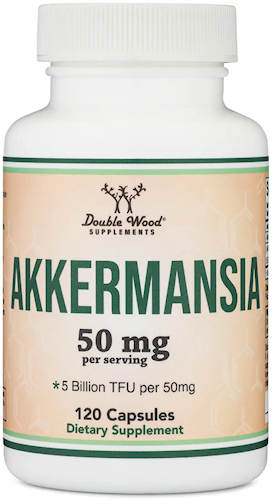
Akkermansia is not an ordinary probiotic. It is a strategic gut-barrier organism.
Most probiotics try to add friendly bacteria to the gut. Akkermansia works closer to the root: the protective mucus layer that helps separate your bloodstream from the outside world passing through your intestines.
When that barrier is strong, digestion feels calmer, immune signaling becomes more orderly, and metabolic communication can become more resilient. When it weakens, the body often pays for it everywhere: energy, appetite, inflammation, skin, mood, and long-term vitality.
- Barrier-first support for the gut’s mucus layer and tight-junction integrity.
- Metabolic communication support through short-chain fatty acid signaling, appetite hormones, and microbial cross-feeding.
- Immune balance support by helping the gut lining remain calm, selective, and well-defended.
120 capsules60 servings50 mg per servingNo refrigeration
Order Akkermansia ↺➕
120 capsule bottle · 60 servings · Double Wood Akkermansia
Comparative Retail Price: $29.95
Our Price: $24.95 for targeted gut-barrier support
↺ Save more with subscription
Automatic delivery + lower cost per order
➕ Save more when you order multiple items
Lower cost per unit as quantity increases
Questions before you order? Call 800.704.0986 for friendly help and nutritional guidance.
The hidden foundation of whole-body health
Health Begins in the Gut — and Gut Health Begins at the Barrier
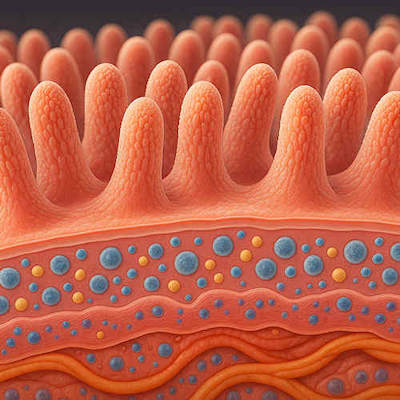
Most people think digestion is just about breaking down food.
It is much bigger than that.
Your gut barrier is like the body’s inner security gate —
quietly deciding what gets welcomed into the bloodstream and what must stay out.
When that barrier is strong, your body can absorb nourishment, manage immune signals,
and keep irritating microbial toxins where they belong.
Along with good sleep,
gut integrity and
a balanced microbiome
may be among the most influential foundations for long-term health, resilience,
and healthy aging. A well-defended gut lining helps protect against unwanted
microbial toxins and partially digested proteins, while a balanced microbiome helps
produce and regulate the compounds that influence metabolism, mood, drive,
immune tone, and recovery.
1. The Barrier
Your intestinal lining acts like a selective shield — letting nutrients through
while helping keep irritants and toxins out.
2. The Mucus Layer
This protective layer is the gut’s front line. When it is healthy, the entire
microbiome has a better place to thrive.
3. The Microbiome
Beneficial microbes help create short-chain fatty acids, immune signals,
and gut-brain messengers that influence how you feel and function.
This is where Akkermansia muciniphila becomes so fascinating.
It is not just another ordinary probiotic floating through the digestive tract.
Akkermansia naturally lives near the mucus layer — the very place
where gut integrity begins. It uses mucin as fuel, supports healthy mucus renewal,
and helps create conditions that favor a more resilient microbial ecosystem.
Think of Akkermansia as a “barrier-first” probiotic.
Instead of simply adding more bacteria, it helps support the terrain —
the mucus shield, the gut lining, and the microbial environment that your body
depends on every day for digestion, immune balance, metabolic health, and vitality.
Why Akkermansia Has Become the Probiotic Informed Health Seekers Are Watching
Akkermansia is a keystone species. Since its 2004 discovery by Prof. Willem de Vos and Dr. Muriel Derrien at Wageningen University, it has been clinically spotlighted in more than 1,000 peer-reviewed studies. Higher levels are repeatedly associated with stronger barrier function, healthier metabolic markers, balanced immune tone, and a more favorable gut environment.
- Mucin-loving probiotic: It naturally resides in the gut’s mucus layer and helps maintain healthy mucus renewal.
- Short-chain fatty acid signaling: It encourages metabolites including acetate and propionate that support metabolic communication.
- Supports butyrate producers: Its metabolites can help feed microbes that produce butyrate, supporting colon comfort and a calm intestinal environment.
- Keystone ecosystem effect: When Akkermansia thrives, it can help create favorable conditions for other beneficial microbes.
- Gut chemistry activation: It supports beneficial postbiotics, microbial balance, and gut-lining repair signals.
- Immune balance: By supporting the mucus barrier and gut lining, it helps the immune system interact with the gut in a more stable, well-regulated way.
- Thrives on the right fuel: Prebiotic fibers, polyphenols, and supportive meal timing can favor its niche.
When Akkermansia Is Low
The change can be subtle at first. The barrier weakens, gut signaling becomes noisier, and the body can drift toward inflammation and metabolic frustration.
- More bloating, gas, heaviness, or irregularity.
- More food sensitivity and gut discomfort.
- Greater endotoxin load and inflammatory stress.
- Weight that resists change despite effort.
- Blood-sugar swings or insulin-resistance patterns.
- Brain fog, mood swings, inconsistent energy, and poor recovery.
When Akkermansia Is Supported
The goal is not stimulation. It is restoration of the terrain. A better gut barrier can make the whole system feel more orderly.
- Stronger mucus layer and tighter gut-junction signaling.
- Healthier appetite signaling through GLP-1 and PYY support.
- Better metabolic communication and smoother post-meal response.
- More balanced immune signaling and calmer inflammatory tone.
- More favorable terrain for Lactobacillus, Bifidobacterium, and butyrate producers.
- More confidence that your gut is helping you, not draining you.
Think of Akkermansia as a gut-barrier gardener. It clears old mucus, encourages renewal, supports helpful microbial cross-feeding, and helps maintain the protective boundary that lets nutrients in while keeping irritants out.
Why Supplement Daily with Akkermansia
Core Reasons
- Cornerstone of gut integrity: Supports intestinal mucus renewal and barrier strength.
- Clinically linked to healthy metabolism: Higher levels correlate with glucose control, weight management, and lower low-grade inflammation.
- Synergizes with native flora: Supports short-chain fatty acid production and whole-body immune signaling.
- No refrigeration, dairy-free, gut-friendly: Practical for daily use and travel.
Rare and Underrated Benefits
- Supports satiety hormones GLP-1 and PYY.
- Emerging research links higher Akkermansia levels with better response patterns to certain cancer immunotherapies.
- Modulates endocannabinoid signaling, supporting gut-brain communication, mood balance, stress resilience, and healthy pain perception.
Top Benefits of Akkermansia muciniphila
- Renews the intestinal mucus layer for a cleaner, stronger gut barrier.
- Optimizes metabolic efficiency by supporting glucose handling, lipid balance, and energy extraction from food.
- Stimulates short-chain fatty acid signaling and satiety hormones GLP-1 and PYY.
- Helps shield against opportunistic microbes by maintaining a strong epithelial barrier.
- Balances immune signaling through IgA and regulatory T-cell support.
A Human Gut Commensal — Not Soil-Based
- Native habitat: It naturally resides in the intestinal mucus layer and uses mucin as its primary fuel.
- Mucus renewal: It consumes old mucus and stimulates renewal.
- Cross-feeding hub: It releases substrates that nourish beneficial butyrate producers such as Faecalibacterium and Roseburia.
- Circadian and diet savvy: Fiber, polyphenols, and consistent meal timing can favor its niche.
- Supplement note: Benefits may be functional and diet-dependent; effects do not necessarily require colonization.
Who Can Benefit from Akkermansia?
In short, almost everyone who wants a stronger gut foundation. It is especially worth considering when the gut barrier, metabolism, immune tolerance, or daily digestive comfort feel less resilient than they should.
- Post-meal bloating, gas, or heaviness
- Weight that will not budge despite diet changes
- Blood-sugar spikes or insulin-resistance patterns
- Food sensitivities and leaky-gut discomfort
- Low-grade inflammation or joint stiffness
- Immune overreactions to pollen, dust, or foods
- Brain fog, mood swings, or inconsistent energy
- Frequent colds or sluggish seasonal immunity
- Elevated LDL or triglycerides on recent labs
- Persistent Candida or opportunistic overgrowths
Research Library
The studies behind Akkermansia.
Akkermansia earns attention because it is not just another “friendly bacteria” story. The research keeps returning to the same persuasive pattern: mucus-layer renewal, gut-barrier integrity, metabolic signaling, and immune communication.
2004Discovered and named as a human intestinal mucin-degrading bacterium.
1,000+Peer-reviewed papers now discuss Akkermansia and related mechanisms.
Human TrialsLive and pasteurized forms have been studied in people, not just animals.
Barrier FirstThe core message is simple: protect the boundary and the whole terrain can improve.
The persuasive idea: Akkermansia is compelling because it works where health begins — at the lining between the outside world and your bloodstream. A better gut barrier is not a small thing. It is the body’s front door, security system, and communication hub all at once.
Why this research feels different
Many probiotics are sold as if more bacteria automatically means better health. Akkermansia is more specific. It is a mucus-layer specialist — a microbe associated with barrier renewal, cross-feeding, and a more resilient gut environment.
What customers should remember
Do not position Akkermansia as a magic pill. Position it as terrain support: a daily way to reinforce the gut lining, support metabolic communication, and help the microbiome behave more like a balanced ecosystem.
Newest human clinical study
Pasteurized Akkermansia muciniphila MucT for weight-loss maintenance
In a randomized controlled trial, adults with overweight/obesity completed a weight-loss phase and then entered a 24-week maintenance period. The pasteurized Akkermansia group had lower weight regain than placebo, and no serious adverse events related to treatment were reported.
Nature Medicine, 2026 · weight-maintenance RCT · important for the field, not a direct product claim for this specific bottle.
Read the 2026 study
Human proof-of-concept
Live and pasteurized Akkermansia in overweight and obese volunteers
This landmark exploratory trial reported that daily oral supplementation with live or pasteurized A. muciniphila for three months was safe and well tolerated, with favorable signals in metabolic markers.
Depommier et al., Nature Medicine, 2019 · PMID: 31263284 · DOI: 10.1038/s41591-019-0495-2
View on PubMed
Personalized probiotic response
Baseline gut levels may influence results
A 12-week randomized, double-blind trial in overweight/obese people with type 2 diabetes found that benefits may depend on baseline Akkermansia levels, supporting microbiome-guided probiotic strategies.
Zhang et al., Cell Metabolism, 2025 · PMID: 39879980 · DOI: 10.1016/j.cmet.2024.12.010
View on PubMed
Big-picture review
A paradigm for next-generation beneficial microorganisms
This major review summarizes the history, mechanisms, and movement from association studies toward causal evidence, including animal studies and a human proof-of-concept trial.
Cani, Depommier, Derrien, Everard & de Vos, Nature Reviews Gastroenterology & Hepatology, 2022 · PMID: 35641786
View on PubMed
Original discovery
The bacterium was first isolated from human intestinal mucus
The original 2004 paper identified Akkermansia muciniphila as a human intestinal mucin-degrading bacterium — the foundation for why it is described as a mucus-layer specialist.
Derrien et al., International Journal of Systematic and Evolutionary Microbiology, 2004 · PMID: 15388697
View on PubMed
Mechanism: pasteurized cells
Pasteurized Akkermansia and the Amuc_1100 membrane protein
Mechanistic work found that pasteurization enhanced certain metabolic effects in mice and identified the outer-membrane protein Amuc_1100 as a key signaling component.
Plovier et al., Nature Medicine, 2017 · PMID: 27892954 · DOI: 10.1038/nm.4236
View on PubMed
Mechanism: tight junctions
Extracellular vesicles and gut permeability
Akkermansia-derived extracellular vesicles have been studied for their influence on gut permeability through tight-junction regulation — a mechanism that fits the “barrier-first” message.
Chelakkot et al., Experimental & Molecular Medicine, 2018 · PMID: 29472701 · DOI: 10.1038/emm.2017.282
View on PubMed
Immune-response research
Akkermansia and response patterns to PD-1 blockade
Research in cancer immunotherapy has linked gut microbiome composition — including Akkermansia abundance — with response patterns to PD-1 checkpoint therapies. This is not a supplement claim, but it illustrates how influential the gut ecosystem can be.
Routy et al., Science, 2018 · PMID: 29097494; Derosa et al., Nature Medicine, 2022 · PMID: 35115705
View Routy study
View Derosa study
Preclinical meta-analysis
Gut and metabolic health modulation in mouse-model studies
A 2024 meta-analysis of mouse-model studies reported effects on inflammatory markers, gut epithelial health markers, glycemic response, lipid profiles, and liver enzymes. This helps explain mechanisms, while human confirmation remains essential.
Khalili et al., Microorganisms, 2024 · PMID: 39203469
View on PubMed
How to translate the studies into a clear customer message
| Scientific theme |
Plain-English message |
Ethical sales wording |
| Mucus layer |
Akkermansia specializes in the protective layer that separates the gut contents from the body. |
“Supports the gut’s protective barrier.” |
| Tight junctions |
The barrier works best when intestinal cells communicate tightly and selectively. |
“Helps maintain healthy intestinal permeability.” |
| Metabolic signaling |
The gut lining helps influence appetite, glucose handling, lipids, and inflammatory tone. |
“Supports a healthier metabolic terrain.” |
| Cross-feeding |
Akkermansia metabolites can help create a better environment for other beneficial microbes. |
“Promotes a more resilient microbiome ecosystem.” |
Important: These studies are included for education and context. They do not mean this product diagnoses, treats, cures, or prevents any disease. Human studies may use different strains, doses, forms, or protocols than this supplement. The strongest honest message is still the best message: Akkermansia is a research-backed, barrier-first probiotic for people who want to support the gut terrain on which digestion, metabolism, and immune balance depend.
Akkermansia — Supplement Facts & How to Use
| Supplement Facts |
|---|
Daily Serving size: 2 Capsules
Servings per container: 60 | |
| Amount Per Serving | % Daily Value |
| Akkermansia | 50 mg | * | |
| (Akkermansia muciniphila AH 39) | * | | | * Daily Value not established |
| | Other Ingredients: Hypomellose (capsule), Rice Flour. |
|
How to Use
- Start by taking one capsule of Akkermansia daily at the beginning of a light protein or fiber-rich meal.
- Do not take on an empty stomach or with a heavy protein meal, as stomach acid is more likely to damage the Akkermansia probiotic at these times.
- After a week, increase to 2 capsules until you are taking 2 capsules twice per day.
These statements have not been evaluated by the FDA. This product is not intended to diagnose, treat, cure, or prevent any disease.
Videos & Audios About Akkermansia
These videos are included for education, background, and deeper understanding. Any claims made by individual speakers are their own and are not product claims.