
800.704.0986 
- Improving lives since 2002
- Fast, Friendly Service
- Free Nutritional Counseling
The key to health is eliminating toxicities and deficiencies! - Dr. William R. Kellas


800.704.0986
The key to health is eliminating toxicities and deficiencies! - Dr. William R. Kellas
At Healthy-Living, we're passionate about sharing the invaluable health insights we've gained over the years. Our experiences, combined with the wisdom of esteemed health pioneers like Dr. William Kellas, have shaped our approach to promoting vibrant health and longevity. Additionally, the collective experiences of our clients and students have enriched our understanding, allowing us to offer effective strategies for extending both healthspan and lifespan.
We invite you to delve into our podcasts, explore the wealth of information on our Health Blog, and peruse the resources available on this page. These platforms are designed to provide you with practical tips, motivational stories, and expert advice to support your health journey.
Should you seek personalized guidance or have specific questions, please don't hesitate to reach out. You can contact us via email or call us directly at 800.704.0986. Our team is here to assist you in achieving your health goals.
While we are committed to sharing knowledge and strategies that have benefited many to become biologically younger, it's crucial to recognize that medical expertise is also critical to best health outcomes. We strongly recommend consulting with your personal physician before implementing any new health practices. Your doctor, familiar with your unique medical history, is equipped to provide advice tailored to your specific genes and circumstances. A collaborative approach ensures that any health decisions you make are safe and appropriate for you.
Begin your journey with our curated set of four foundational slides, designed to introduce you to the core principles of vibrant health.
America runs on speed. Full calendars. Constant notifications. Drive-thru meals. Late-night screens. Early-morning rush. Most people don’t “choose” weaker health — they get pulled into a pace that quietly crowds out sleep, real food, movement, and recovery. If that’s been your experience, you’re not broken — you’re a normal person living inside an abnormal rhythm.
And here’s the hopeful part: doing something about it has never been more possible than it is right now. We finally know what matters most, what to ignore, and how to make it realistic. You don’t need to overhaul your life or outlive everyone. You just need your body to feel good enough to enjoy the life you’re already living — with less pain, more freedom, and more “good days.”
Here’s the calm truth that actually helps: your health is being built quietly, either way. Small daily patterns compound — like interest — into either more strength, clarity, and freedom… or less.
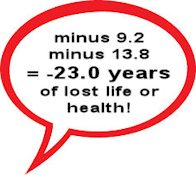 If you like concrete numbers, one simple way to think about “drift” is this:
each month you postpone improving core habits may cost roughly 2 to 7 days of future high-quality life
(the range depends on how far your current habits are from optimal).
If you like concrete numbers, one simple way to think about “drift” is this:
each month you postpone improving core habits may cost roughly 2 to 7 days of future high-quality life
(the range depends on how far your current habits are from optimal). But this is the part that creates peace: the same compounding works in your favor the moment you begin. You don’t need extreme programs. You don’t need guilt. You don’t need to change everything this week. You just need a simple framework you trust — and then you follow it.
That’s why we coach you in what makes makes the most difference in health. The habits of health are not complicated — they’re the foundational behaviors that let your body do what it was designed to do: repair, rebalance, and steadily get stronger.
There are laws behind health—and they start with food.
Health is not random. Neither is decline.
Nations do not accidentally become healthy, nor do they accidentally fall apart. They follow patterns—quiet, ordinary, repeated patterns.
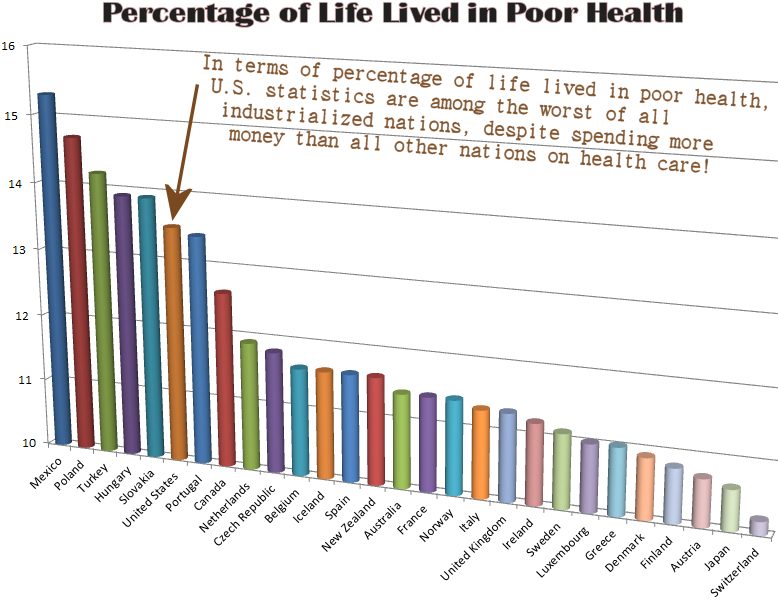
There is a reason Switzerland consistently ranks among the healthiest industrialized nations in the world, while the United States—despite spending more on health care than any other country—ranks near the bottom.
The difference is not better doctors. The difference is what people eat.
 The Swiss are famous for precision—watches designed to last a lifetime. That same precision governs their meals: food prepared at home, made from fresh ingredients, eaten with intention.
Americans are famous for convenience. Fast food. Fast schedules. Fast decline. 
The modern American diet is dominated by foods that fill the stomach while starving the body— heavy in sugars, refined carbohydrates, damaged fats, and chemical additives, yet remarkably low in true nourishment.
When real nutrition disappears, the body begins to age early. What is often labeled “normal aging” is frequently the long-term result of nutritional neglect.
People who stay strong and clear-minded into their 100s and beyond aren’t “just lucky.” They protect one habit most people treat as optional: sleep.
Sleep is not merely rest. It is when the body runs its highest-value work: repair, immune calibration, memory filing, hormone balancing, and nervous-system reset. You wake up with more capability — not because you tried harder, but because your body got time to rebuild.
That’s not hype. That’s biology. When sleep becomes shallow and broken, your defenses become easier to break.
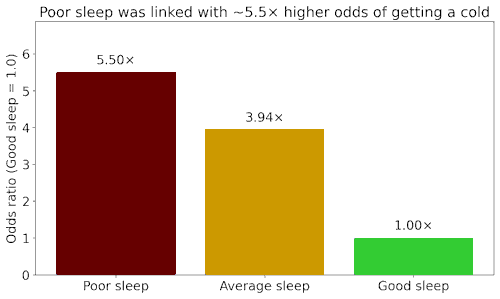
The best part is that there is hope for everyone because: Sleep isn’t “complicated” — it’s obtainable. You don’t need perfection. You need consistency, and some easily learned setups.
Three simple environmental setups that work especially well after 50:
And two habits an hour before bed:
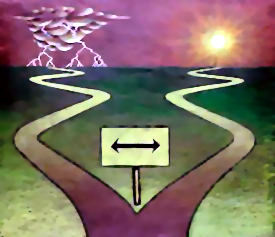
"Two roads diverged in the woods and I took the one less traveled by, and that has made all the difference in the world!" — Robert Frost.
The end of the Standard American Diet road is:
The end of the Healthy Living road is:
"I need to live forever. I just want my body to feel good enough to enjoy life — beach/nature days, walks, laughter, and the people I love."
Please choose the road less traveled. Subscribe to our Healthy-Living newsletter and learn the truths about how to be healthy.
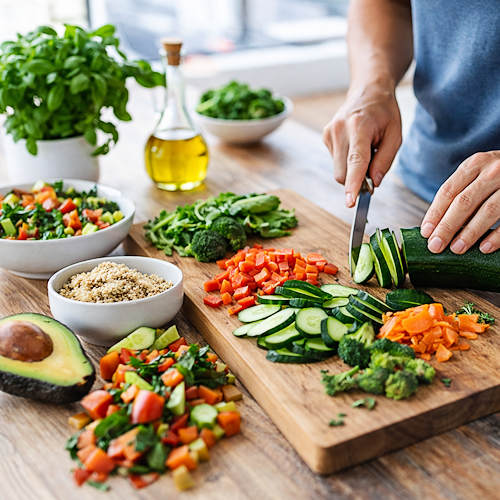
Good nutrition is not a strange diet, a punishment, or a math problem. It is the simple habit of giving your body the raw materials it needs to build, repair, think, move, sleep, and age well. A teenager, a parent, and a grandma may need different amounts of food, but the basic pattern is the same: eat mostly real food, get enough protein, fill the plate with color, drink water, and stop letting factory snacks make the decisions.
Everyone gets to choose their “hard.” The upfront hard is planning, shopping, cooking, and saying no to foods that steal your health. The delayed hard is low energy, cravings, stubborn weight, weakness, digestive complaints, and a life that gradually feels smaller. The goal is not perfection. The goal is to make your ordinary meals so good that your body finally has a fair chance.
Make every calorie earn its place. Build meals from vegetables first, then add legumes or clean protein (meat, fish, tofu, etc.), a small amount of smart starch if needed, and healthy fats such as extra-virgin olive oil, nuts, seeds, or avocado. Think vegetables, lentils, beans, mushrooms, berries, nuts, seeds, herbs, spices, and olive oil. Keep fruit whole, favor berries, avoid sugary drinks, and do not let fast food, junk food, white flour, candy, or snack foods become daily habits.
You do not have to swear off every treat forever. But some foods should stop being “normal daily food.” They are too easy to overeat, too low in nutrition, and too good at creating cravings.
The better approach is not just “eat less bad food.” It is eat more of the foods your body is waiting for. When you add enough real nutrition, cravings often become easier to manage because your body is not constantly searching for missing minerals, protein, fiber, and healthy fats.
Breakfast: eggs with spinach and tomatoes, or Greek yogurt with berries, nuts, and oats.
Lunch: chicken, tuna, beans, or tofu over a large salad with olive oil dressing and a baked potato or fruit.
Dinner: meat, fish, eggs, or beans with two vegetables and a smart starch such as sweet potato, rice, squash, or lentils.
Snack if needed: apple with peanut butter, boiled eggs, cottage cheese, carrots with hummus, nuts, or leftovers.
Before you check out, look at your cart. Could you make actual meals from it? Do you see protein, vegetables, fruit, and real ingredients? Or is it mostly boxes, bags, bottles, and snacks? A healthy cart usually has foods your great-grandmother would recognize: eggs, meat, fish, beans, potatoes, vegetables, fruit, butter, olive oil, rice, oats, yogurt, and herbs.
Do not make this harder than it has to be. Cook once and eat twice. Make extra chicken, rice, soup, roasted vegetables, taco meat, boiled eggs, or baked potatoes. Keep emergency real food ready: canned salmon, frozen vegetables, plain yogurt, eggs, apples, nuts, and a bag of salad. The person who has good food ready is much less likely to panic-eat junk.
Eat real, nourishing food most of the time. Leave a little room for celebration. Cake at a birthday party is not the problem. Cake for breakfast, soda at lunch, chips after school, and ice cream every night is the problem. A treat should feel special. If it happens every day, it is no longer a treat; it is a habit.
Teenagers should learn this early because bodies are being built from the food they eat. Grandmas and grandpas should care because muscle, balance, strength, memory, and independence need nourishment. Parents should care because the kitchen sets the pattern for the whole household.
Start with one week. Remove sugary drinks. Add protein to breakfast. Put vegetables on the dinner plate. Keep fruit visible. Cook two simple meals in advance. After seven days, repeat. Health is not built by one heroic decision. It is built by hundreds of small choices that become normal.
Educational note: If you are pregnant, have diabetes, kidney disease, an eating disorder, food allergies, trouble swallowing, or take medications affected by diet, work with a qualified healthcare professional before making major diet changes.
Non-government resources that emphasize real food, nutrient density, fewer ultra-processed foods, and practical eating patterns.
Note: These groups do not agree on everything. Some are more plant-forward, while others emphasize traditional animal foods. Their useful overlap is simple: eat real food, avoid refined sugar and white flour, reduce ultra-processed foods, and build meals from nutrient-dense ingredients.
Sleep is not a luxury, a weakness, or simply the thing you do when the day is over. Sleep is one of the most powerful forms of medicine your body already knows how to use. Every night, while you are still and unaware, your brain and body are working with remarkable intelligence. Cells repair. Hormones rebalance. Memories are organized. The immune system is strengthened. The nervous system resets. The brain clears waste, restores focus, and prepares you to meet the next day with steadiness instead of strain.
Poor sleep does not merely make a person tired. It changes how life feels. A night of bad sleep can make small problems seem large, cravings harder to resist, pain more noticeable, patience thinner, and decisions less clear. Over time, poor sleep can affect mood, metabolism, immune resilience, blood pressure, weight, productivity, relationships, and overall quality of life. In contrast, good sleep gives a person more than energy. It gives emotional balance, sharper thinking, better discipline, and a deeper sense of well-being.
The good news is that better sleep is not built by accident. It is trained. Your body has an internal clock that responds to rhythm, light, temperature, movement, food, stress, and repetition. When those signals are consistent, sleep becomes easier. When those signals are chaotic, the body stays on alert. The goal is not to force sleep. The goal is to create conditions where sleep can arrive naturally.
The most important sleep habit is a regular wake time. Waking up at about the same time each day teaches your body when the day begins and when the night should come. A consistent bedtime helps too, but wake time is the anchor. Even on weekends, try not to drift too far from your normal schedule. Your body loves rhythm more than perfection.
Morning light is another powerful signal. Step outside soon after waking, even for a few minutes. Natural light tells your brain to become alert now and to prepare for sleep later. During the day, move your body. Exercise, walking, stretching, and ordinary physical activity all help build healthy sleep pressure by evening.
The hour before bed should feel different from the rest of the day. This is your landing strip. Dim the lights. Put away work. Reduce phone scrolling, news, intense conversations, and anything that pulls the mind into problem-solving mode. Bright screens and mental stimulation tell the brain that the day is not finished.
Replace stimulation with a simple routine: reading, prayer, journaling, gentle stretching, calm music, slow breathing, or a warm bath. A routine does not need to be long. It only needs to be repeated. Over time, the body begins to recognize the pattern and prepares for rest before you even climb into bed.
Your bedroom should send one clear message: this is a place for rest. Keep it cool, dark, quiet, and comfortable. Darkness supports the body’s natural sleep chemistry. A cooler room helps the body settle. If noise or light is a problem, use blackout curtains, a sleep mask, a fan, white noise, or earplugs. Small changes can have a large effect when they remove signals that keep the nervous system alert.
What you consume during the day can follow you into the night. Caffeine can stay active for many hours, so people who struggle with sleep often benefit from stopping caffeine by late morning or early afternoon. Heavy meals close to bedtime can keep digestion busy when the body should be slowing down. Alcohol may make you feel sleepy at first, but it often disrupts deeper, more restorative sleep later in the night.
Take all the above 45 minutes before you want to be asleep.
If you wake up during the night, do not turn it into a battle. Stay calm. Keep lights low. Avoid checking the clock repeatedly. Remind yourself that quiet rest still has value. If your mind is racing, write down the thought, breathe slowly, and let the body return to safety.
Better sleep is not about one perfect night. It is about becoming the kind of person whose days and evenings make sleep possible. Treat sleep as a foundation, not an afterthought. When you protect it, you protect your mind, your health, your emotions, your relationships, and your future.
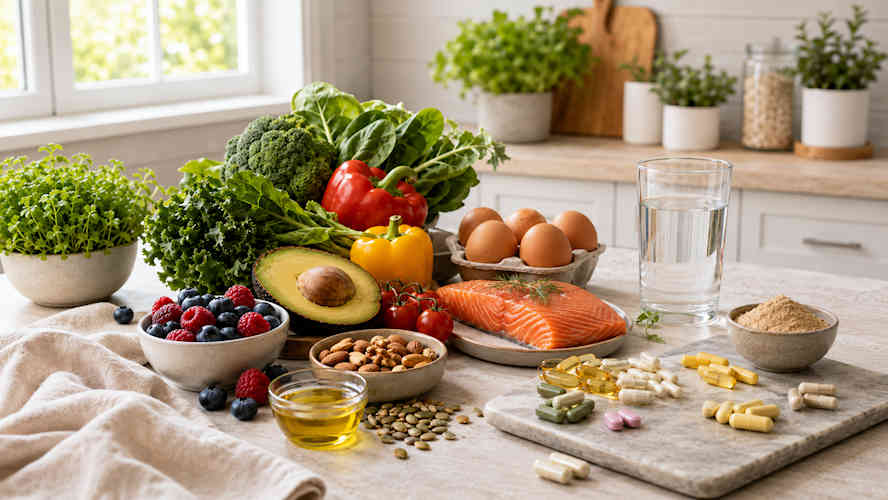
Supplements are not a replacement for good food, sleep, movement, water, sunlight, prayer, peace, or common sense. They are not magic pills. They do not cancel out a life of soda, fast food, late nights, and no exercise. But once a person begins building a real health foundation, the right supplements can become extremely valuable tools.
Think of health like building a house. Food and lifestyle are the foundation, walls, roof, plumbing, and electrical system. Supplements are not the house. They are the better tools, stronger fasteners, missing parts, maintenance supplies, and upgrades that help the whole structure hold up better over time. A good diet may take you most of the distance. Strategic supplements help fill the gaps, reinforce weak spots, and support the systems that tend to decline with age, stress, poor digestion, toxins, and modern living.
Before chasing advanced supplements, start with the basics: eat real food, get enough protein, eat colorful plants, avoid sugary drinks, reduce ultra-processed foods, move daily, build muscle, sleep deeply, hydrate, and manage stress. When those basics are ignored, supplements are forced to do cleanup work they were never meant to do. When those basics are in place, supplements can work with the body instead of fighting against daily abuse.
Many people say, “I eat pretty well, so why would I need supplements?” The answer is simple: eating well is essential, but it does not guarantee that every nutrient, enzyme, antioxidant, cofactor, fatty acid, mineral, and repair compound is present in the amount your body needs. Modern food quality varies. Soil minerals vary. Stress uses nutrients faster. Aging changes digestion. Medications can alter nutrient status. Busy families often eat repetitive meals. Some people avoid entire food groups. Others eat good food but do not digest it well.
Supplements are valuable because they let you support specific “bottlenecks.” If your bottleneck is cellular energy, you choose energy-supporting nutrients. If it is digestion, you support digestion. If it is joints, connective tissue, glucose control, sleep, inflammation balance, or detoxification, you choose tools that match that need. The goal is not to swallow everything. The goal is to think clearly.
A wise supplement plan is not a giant pile of bottles. It is a strategy. Your body does not need confusion. It needs consistency. Start with a few foundational supports, then add targeted help where your body is showing the greatest need.
Daily foundation: Begin with broad support such as magnesium, vitamin D3 + K2, omega oils, vitamin C, creatine, and a food-based nourishment product like Seven Essentials/E7.
Energy support: If energy, stamina, or brain drive are weak, consider tools such as CoQ10, taurine, acetyl-L-carnitine, NAD-support strategies like Nuchido TIME+, and creatine.
Repair and resilience: For long-term tissue support, consider collagen, curcumin, glutathione support, sulforaphane, and spermidine.
Gatekeeper support: If digestion, gut flora, glucose control, or methylation are weak, consider digestive enzymes, probiotics or soil-based organisms, dihydroberberine, and methylation support.
Magnesium is one of the first minerals to understand because it supports muscles, nerves, relaxation, sleep quality, glucose metabolism, and energy production. Many people live in a stressed, tight, overstimulated state. Magnesium helps the body remember how to relax.
Vitamin D3 plus K2 is a sensible long-term foundation for many people, especially those who get little sun. Vitamin D supports immune, bone, muscle, and mood-related functions. K2 helps the body use calcium more wisely, supporting bones while helping maintain healthier calcium balance in soft tissues.
Omega oils support cell membranes. Every cell has a membrane, and those membranes help determine how well nutrients, hormones, and signals move in and out. Healthy fats matter for the brain, heart, eyes, joints, mood, and inflammatory balance.
Creatine is not just for athletes. It helps muscles and the brain recycle ATP, the quick energy currency of the cell. For aging adults, busy workers, students, and people who want better strength and reserve capacity, creatine is one of the most practical supplements to understand.
Vitamin C is basic, but basic does not mean unimportant. Humans cannot make vitamin C, yet we need it for collagen formation, antioxidant defense, immune readiness, capillary integrity, and tissue repair. It pairs beautifully with collagen and other repair-focused strategies.
Once the foundation is covered, targeted supplements can be chosen by purpose. CoQ10 is often used for mitochondrial and heart-energy support, especially as people age. Acetyl-L-carnitine helps move fatty acids into mitochondria and is often chosen for brain and energy support. Taurine supports the heart, nervous system, bile flow, electrolytes, and calm resilience. Curcumin supports healthy inflammatory balance. Collagen supplies amino acids used in skin, joints, tendons, ligaments, bones, and blood vessels. Sulforaphane supports the body’s own antioxidant and detoxification pathways. Spermidine supports cellular cleanup and renewal.
Digestion deserves special attention because it determines whether food and supplements are actually used. A person can buy excellent nutrition and still absorb it poorly. Digestive enzymes, probiotics, soil-based organisms, and gut-supportive foods can help make nutrition more usable. Better digestion often means fewer complaints after meals and more benefit from the food already being eaten.
The best supplement plan is not dramatic. It is intelligent, steady, and personal. Food builds the base. Lifestyle sends the signal. Supplements provide targeted support so the body has more of the materials it needs to repair, defend, energize, and stay capable. Used wisely, supplements are not a distraction from healthy living. They are part of a serious health maintenance plan.
Educational note: Supplements are not intended to diagnose, treat, cure, or prevent disease. If you are pregnant, nursing, taking medications, using blood thinners, managing a medical condition, or preparing for surgery, consult a qualified healthcare professional before beginning a new supplement program.
For a deeper product-by-product guide, see: Top 20 Supplements for Staying Strong, Clear & Capable.
Coming in July 2026
More than 180,000 frequencies from your body scanned, pattern-recognizied, categorized, and shown to you so that you can adopt living, eating, sleeping, exericising, and detoxification habits that will move these patterns toward optimum.
<< Pop Up 1 - Enter Your Content Here >>
<< Pop Up 2 - Enter Your Content Here >>
Copyright 2002 - 2026. All rights reserved.
These statements have not been evaluated by the Food and Drug Administration. No product mentioned herein is intended to diagnose, treat, cure or prevent any disease. If you are pregnant, nursing, taking medication, or have a medical condition, consult your physician before making any lifestyle change, including trying a new product or food.
The information on this website is intended as a sharing of knowledge and information from the research and experience of the Healthy-Living.Org staff and contributors. It is not intended to replace a one-on-one relationship with a qualified health care professional and it is not intended as medical advice. You should not use the information on this site for diagnosis or treatment of any health problem or for modification of any medication regimen. You should consult with a healthcare professional before starting any diet, exercise or supplementation program, before starting or discontinuing any medication, or if you suspect you have a health problem. You should keep in mind that cited references to ongoing nutritional scientific study are most likely not accepted by the FDA as conclusive. These references and mentions of benefits experienced by others are disavowed as product claims and are only included for educational value and as starting points for your own research. No food or supplement can be considered safe for all individuals. What may benefit 999,999 of a million people may harm you. Therefore, no one can take responsibility for your health except you in concert with your trusted health professional.