


Progressive Labs Lutein/Zeaxanthin
From marigold petals to macular pigment. Discover the nutrients your eyes use to see fine detail.
20 mg lutein • 4 mg zeaxanthin isomers • 30 softgels
Order Now Supplement Facts How to Use Research Videos FAQs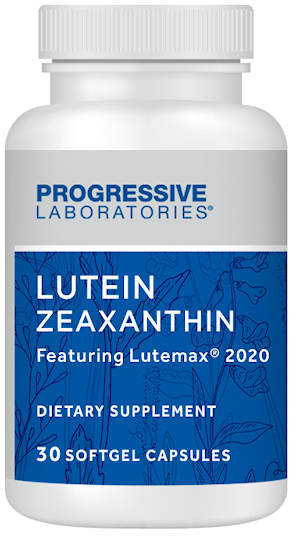
The fine detail in a familiar face
Think of the instant you catch a grandchild trying to hide a grin. The corner of a mouth, the crinkle around an eye. You see those details with your macula, a small area at the back of each eye.
- Lutein gives macular pigment some of its yellow color.
- Zeaxanthin and meso-zeaxanthin are especially concentrated toward the center of your vision.
- One softgel brings all three pigments together in a marigold flower extract.

What is Progressive Labs Lutein/Zeaxanthin?
Lutein/Zeaxanthin is a focused eye nutrition supplement from Progressive Laboratories. The formula starts with Lutemax 2020®, a marigold extract that contains the same three carotenoids found in macular pigment. Carotenoids are the compounds that give many flowers and vegetables their yellow and orange hues.
Look closely at the label and you’ll see two amounts. The 20 mg refers to lutein. The 4 mg is shared by the two forms of zeaxanthin, including meso-zeaxanthin.
What the macula does for you
Try looking directly at a single word on this page. You can read its letters while still noticing the lines around it. The sharp detail at the point you’re looking at depends on the macula. Your wider field of vision comes from the surrounding retina.
Why the pigment is yellow
Lutein and zeaxanthin absorb some of the short-wavelength blue light entering the eye. The light they absorb explains their yellow color. In the retina these pigments also have antioxidant properties. Read the research review.
The three pigments in the formula
Lutein
This pigment is found across the macula and is relatively more abundant toward its outer edge.
Zeaxanthin
A close relative of lutein, zeaxanthin is more concentrated toward the center. Egg yolks and yellow corn are familiar dietary sources.
Meso-zeaxanthin
This form is most concentrated at the very center of the macula. Lutemax 2020® includes it alongside ordinary dietary zeaxanthin.
How does this compare with an AREDS2 formula?
The National Eye Institute recommends considering the complete AREDS2 formula for people with intermediate age-related macular degeneration (AMD) in one or both eyes, or late AMD in one eye when the other is still at risk. The formula combines 10 mg lutein and 2 mg zeaxanthin with vitamins C and E, zinc and copper.
Progressive Labs supplies the two pigment families on their own. If your eye specialist has recommended AREDS2, look for all six nutrients on the label. See the National Eye Institute’s formula.
Inside this bottle
20 mg lutein
4 mg zeaxanthin isomers
One softgel daily
Which foods supply lutein and zeaxanthin?
The yellow pigments are easy to spot in some foods. In leafy greens, chlorophyll hides them.
- Spinach
- Kale
- Green peas
- Egg yolks
- Yellow corn
- Orange peppers

At the table · A little olive oil on warm greens brings out their flavor. It also helps you absorb their fat-soluble carotenoids.
What can these pigments change about the way we see?
Seeing detail when colors nearly blend together
Black letters on white paper give your eyes plenty of contrast. Gray type on a pale background asks more of them, even when the letters are the same size. That ability to pick out small differences in brightness is called contrast sensitivity. In a yearlong study of adults who started with low macular pigment, people taking three macular carotenoids became better at distinguishing certain striped patterns than people taking a placebo. The researchers used a different blend from this softgel. Read about the CREST trial.
Finding a target again after bright light
Think of the few seconds after a camera flash, when you can still see the flash in your field of vision. Researchers can time how long it takes a person to pick out a target again. They call this photostress recovery. In one controlled trial, young adults taking lutein and zeaxanthin recovered faster on that test. The same trial also measured how much glare hid a target, and the groups showed no significant difference on that measure. See what participants took and for how long.
What scientists mean by “more macular pigment”
These yellow pigments absorb some of the blue light passing through the macula. Scientists can estimate how much pigment is there by measuring how strongly it absorbs light. The result is called macular pigment optical density. It answers a different question from an eye chart, which measures how small a letter you can read. In a review of 46 studies, pigment density generally rose with supplementation. How much of a change a person would notice in everyday life is still an open question. Explore the review.
How a meal delivers lutein to the eye
At breakfast, the lutein in spinach is tucked inside plant cells. Chewing and digestion release it, and fat in the meal helps the intestine absorb it. The absorbed pigments travel in the blood, and the retina selectively accumulates them. That gives you a reason to enjoy a little olive oil with greens or add an egg to a vegetable dish. Read the review of food sources and absorption.
Why are there three pigments but only two amounts on the label?
One softgel supplies 20 mg of lutein. The other 4 mg includes both dietary zeaxanthin and meso-zeaxanthin. They have the same chemical formula, but some atoms point in different directions. The label counts their combined weight once.
Lutemax 2020® is the name of the marigold extract supplying all three. The eye itself can also make meso-zeaxanthin from lutein. That helps explain how a pigment that is scarce in common foods can be abundant at the center of the retina. Read the biochemical review.
Order Progressive Labs Lutein/Zeaxanthin
30 softgels per bottle · Item #271
$24.00
Questions before you order? Call 800.704.0986.
Lutein/Zeaxanthin — Supplement Facts & How to Use
Supplement Facts
Serving size 1 softgel · 30 servings per bottle
| Ingredient | Amount |
|---|---|
| Lutein | 20 mg |
| Zeaxanthin isomers | 4 mg |
Daily Values have not been established.
Other ingredients
Safflower oil, bovine bone gelatin, sunflower oil, glycerin, purified water, yellow beeswax and sunflower lecithin.
How to Use
Take one softgel daily, preferably with a meal. Each bottle supplies 30 days at the suggested serving.
Avoid this product if you are allergic to daisy-like flowers. If you are pregnant, nursing, take medication or have a medical condition, consult your healthcare professional before use.
Videos about how your eyes work
Two short animations from the National Eye Institute show the parts of the eye discussed on this page.
Lutein/Zeaxanthin FAQs
Where exactly is the macula?
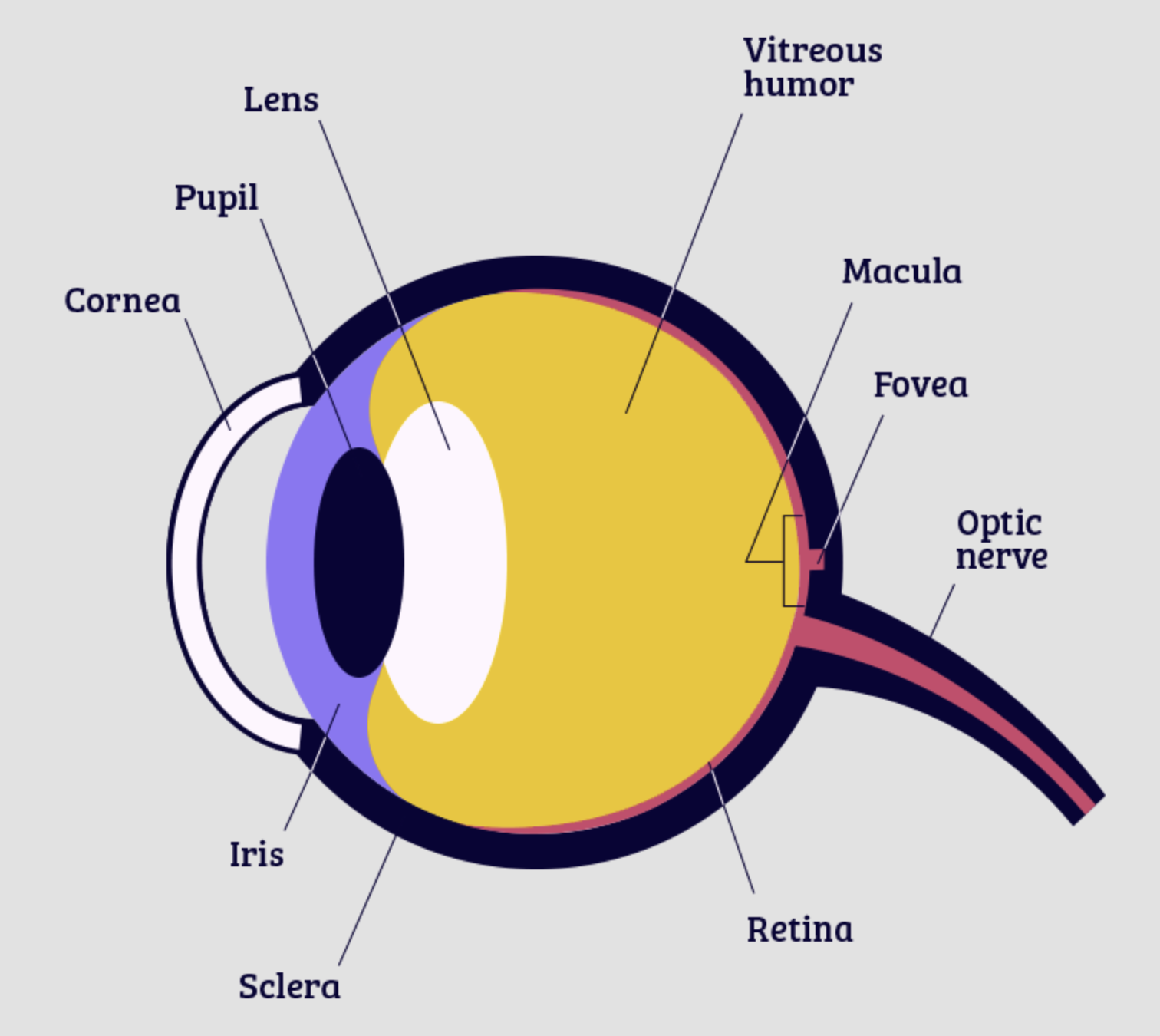
Look at the back of the eye in the diagram. The retina lines the inside of the eye. The macula is near its center, and the fovea is the spot within it where fine detail is sharpest.
Why take it with a meal?
Lutein and zeaxanthin dissolve in fat. A meal with some olive oil, avocado or eggs is a practical time to take your softgel.
Is the capsule vegetarian?
The pigments come from marigolds. The capsule shell contains bovine gelatin, so people following a vegetarian diet will want a different capsule material.
Does this contain beta-carotene?
Progressive Labs lists lutein and zeaxanthin isomers as the two active ingredients. Both amounts are shown under Supplement Facts.
How long did the vision studies last?
The two screen-use trials lasted six months, and two trials of contrast or bright-light recovery lasted a year. Each measured how groups changed over time. Those timelines help explain what researchers could observe, but they cannot predict when an individual might notice a difference. See the trials below.
A breakfast that puts these foods together
- Wilt a handful of spinach in olive oil.
- Add a beaten egg and diced orange pepper.
- Fold into an omelet and serve while warm.
What have human studies found about lutein and zeaxanthin?
- Can diet or supplements build macular pigment? A 2021 review combined evidence from 46 studies involving 3,189 people with healthy eyes. Trials lasting three to twelve months generally found larger increases in pigment density in the higher-dose groups. The authors could not identify a minimum dose that would produce a noticeable change in vision. Read the systematic review (2021).
- Seeing faint patterns. The CREST trial enrolled 105 people with low macular pigment and no retinal disease. After a year, the group taking lutein (10 mg), zeaxanthin (2 mg) and meso-zeaxanthin (10 mg) distinguished fainter stripes at two pattern sizes than the placebo group. One of those sizes was the main test researchers chose in advance. Nolan and colleagues (2016).
- Recovering after a bright flash. In a trial of 115 healthy young adults, 10 mg lutein plus 2 mg zeaxanthin daily for a year improved recovery time after intense light and the ability to distinguish a target against a colored background. The investigators found no significant treatment effect on a separate glare test. Hammond and colleagues (2014).
- Comfort during long days at a screen. In a six-month trial, 48 young adults who used screens at least six hours a day took either a placebo or 24 mg of carotenoids from Lutemax 2020®, the extract used in this product. The supplement group performed better on contrast tests and reported less frequent eyestrain and headaches. The ingredient supplier funded this small study, and participants rated their own symptoms. Stringham and colleagues (2017).
- Did another screen study find the same thing? A 2025 trial enrolled 70 adults with more than six hours of daily screen use. It compared 10 mg lutein and 2 mg zeaxanthin isomers from a different extract with placebo for six months. Tear production, tear-film stability and recovery from bright light improved more with the extract. The groups reported similar changes in eye symptoms and performed similarly on contrast tests. Read the 2025 screen-use trial.
- What the original AREDS2 trial tested. Researchers enrolled 4,203 adults already at high risk of advanced AMD. Over about five years, adding 10 mg lutein plus 2 mg zeaxanthin to a background AREDS supplement did not significantly reduce progression in the primary comparison with placebo. The trial studied people with established retinal changes. AREDS2 randomized trial (2013).
- Why lutein and zeaxanthin replaced beta-carotene. At ten years, researchers compared people originally assigned to lutein and zeaxanthin with those assigned to beta-carotene. The lutein and zeaxanthin group had a 15% lower relative hazard of progression to late AMD in that comparison. The result supports the choice of pigments in the complete AREDS2 formula. AREDS2 follow-up (2022).
- What about cataracts? A cataract clouds the lens at the front of the eye. An AREDS2 analysis followed 3,159 participants who still had a natural lens in at least one eye. Over nearly five years, adding lutein and zeaxanthin made no significant difference in the overall rate of cataract surgery. AREDS2 cataract report (2013).
- Does the food source matter? In a crossover study, ten men each tried spinach, lutein-enriched eggs and two supplement forms in separate nine-day periods. The enriched eggs produced the largest rise in blood lutein after accounting for dose. Researchers measured absorption over a short period, so the study leaves open how these foods compare for long-term vision. Chung and colleagues (2004).


