
800.704.0986 comodo secure

  • Improving lives since 2002
  • Fast, Friendly Service
  • Free Nutritional Counseling

The key to health is eliminating toxicities and deficiencies! - Dr. William R. Kellas

shopping cartaccount login

 800.704.0986comodo secure
account loginshopping cart
Scroll To Top

Double Wood TUDCA

Liver and bile support from a bile acid your body naturally makes in small amounts.

250 mg per capsule  •  500 mg per serving  •  30 daily servings
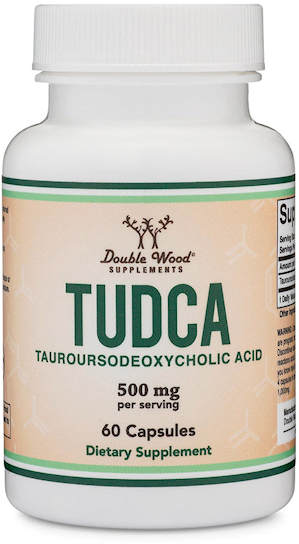
Double Wood TUDCA supplement bottle

You chose the good fats. What happens after the first bite?

You slice an avocado, dress the greens with olive oil, and sit down to lunch. You can see the care you put into that meal. The next part is hidden. In your small intestine, bile salts help disperse the fat so digestive enzymes can reach it. That step helps your body make use of the foods you chose.

TUDCA is short for tauroursodeoxycholic acid, one of the bile acids found in human bile. If you want to focus specifically on liver and bile support, Double Wood puts a measured amount of that one active ingredient in each capsule.

  • A defined amount. Each capsule delivers 250 mg of TUDCA. Two capsules supply the full 500 mg serving.
  • A source you can identify. Double Wood makes the active ingredient synthetically, without harvesting animal bile.
  • A simple daily routine. One bottle supplies 30 daily servings. See the directions for use.
60 capsules 30 servings Gluten-free Non-GMO

Order Double Wood TUDCA

60 capsules per bottle · 30-day supply at the labeled serving

Our price: $27.95 per bottle

One bottle, one month

Two capsules daily works out to about $1.77 per serving.

Know your dose

The 500 mg on the label is the total for two 250 mg capsules.

Questions about the product or your order? Call Healthy-Living at 800.704.0986.

Size: 
Quantity: 

The part of lunch your liver takes care of

Labeled diagram showing the liver, gallbladder, and bile duct leading into the duodenum next to the pancreatic duct.
National Institute of Diabetes and Digestive and Kidney Diseases, National Institutes of Health

Oil and water separate in a jar of salad dressing. Your intestine faces a similar problem. Its contents are mostly water, yet some of the nutrients you need travel with fat. Bile salts have a surface that interacts with water and another that interacts with fat. That chemistry helps disperse large fat droplets into smaller ones.

Smaller droplets expose more surface area to lipase, the enzyme that breaks down fat. Bile salts then help form tiny particles called micelles that carry the products of digestion and vitamins A, D, E, and K toward the intestinal lining. See how digestion works.

Your body recycles its bile acids. It reabsorbs about 95% of its bile acids and returns them to the liver. The same pool can help with multiple meals. Scientists call this the enterohepatic circulation. Read about bile acid recycling.


What the liver makes

Bile is a fluid. Bile acids are ingredients in it. Water, bile salts, phospholipids, cholesterol, and bilirubin all travel in bile. Each has a different job.

  • Cholesterol is a starting material. The liver uses it to make primary bile acids.
  • Taurine can become part of a bile acid. When taurine joins ursodeoxycholic acid (UDCA), the resulting molecule is TUDCA.
  • TUDCA mixes relatively well with water. Researchers call this property hydrophilicity. It helps explain their interest in how TUDCA changes the composition of bile.
  • Gut bacteria also play a role. As bile acids pass through the intestine, microbes can change their chemical form.

What happens when you eat

The liver, gallbladder, pancreas, and small intestine each do a different part of the job.

  • The liver secretes bile into a branching network of ducts.
  • The gallbladder stores and concentrates bile between meals. Fat entering the small intestine helps trigger its release.
  • The pancreas sends lipase into the small intestine, where it acts on fat droplets.
  • The intestinal lining takes up the products of fat digestion along with fat-soluble vitamins.
  • The last part of the small intestine recovers most of the bile acids and sends them back to the liver through the bloodstream.

Why choose a formula with one active ingredient?

Turn over a bottle of Double Wood TUDCA and the first question is easy to answer. What supplies the 500 mg? All 500 mg in a serving comes from TUDCA. The capsule ingredients are listed separately, so you can see exactly what you are adding to your routine.

That clarity matters if you already take digestive enzymes, taurine, or an herbal liver formula. Each has a different composition. The Supplement Facts make it easy to compare.

Five questions worth asking about a TUDCA bottle

1. How much is in each capsule?

The front of the bottle lists 500 mg per serving. The serving is two capsules, so each contains 250 mg. A bottle of 60 supplies 30 labeled servings.

2. Where does the TUDCA come from?

Historically, bear bile was a source of TUDCA. Double Wood states that its active ingredient is made synthetically. The capsule shell contains gelatin, which matters if you follow a vegetarian or vegan diet.

3. What else is in the capsule?

The current label lists gelatin, rice flour, vegetable stearate, and silica as other ingredients. Double Wood identifies this formula as gluten-free, soy-free, and non-GMO.

4. How is TUDCA different from a digestive enzyme?

Think of the olive oil on your salad. In your small intestine, bile salts help disperse that oil into tiny droplets. This gives lipase, a digestive enzyme made by your pancreas, more surface to work on as it breaks down the fat for absorption. TUDCA belongs to the bile acid family. That’s why its label lists milligrams, while a lipase label typically lists units of enzyme activity.

5. What does a daily serving cost?

At $27.95 for 30 servings, the cost is approximately $1.77 per day. The labeled serving stays the same regardless of the size of your meal.

Why researchers are interested in TUDCA

Bile acids differ in how readily they interact with fats and water. TUDCA sits toward the more water-friendly end of that range. Researchers have followed this property from studies of human bile to experiments on how cells handle stress.

  1. Bile composition. In a six-month study of people with primary biliary cholangitis, researchers analyzed bile before and during oral TUDCA use. The mix shifted toward more water-friendly bile acids. The study measured a chemical change in people with a liver condition. Read the study.
  2. Cellular stress. The endoplasmic reticulum is where many proteins are folded into working shapes. In experiments with cells and mice, TUDCA acted as a “chemical chaperone” and reduced markers of stress in this system. Whether the labeled serving provides a meaningful benefit through this pathway in healthy adults remains an open question. Read the laboratory study.
  3. Human outcomes. Researchers have tested TUDCA in several specific groups. The study population, dose, and outcome matter when you read a headline. The research summaries give those details, including findings from trials that did not show the hoped-for benefit.

Six terms that make TUDCA research easier to read

  1. Taurine. An amino sulfonic acid that the liver can attach to bile acids. Free taurine and TUDCA are distinct molecules.
  2. UDCA. Ursodeoxycholic acid, also called ursodiol. It is available as a prescription medicine in the U.S.
  3. TUDCA. The taurine-linked form of UDCA. The “T” in its name identifies that chemical link.
  1. Bile acid pool. The collection of different bile acids moving between your liver and gut.
  2. Cholestasis. Slowed or impaired bile flow. This term often appears in liver studies and requires medical evaluation when suspected.
  3. ALP. Alkaline phosphatase, a blood marker often tracked in bile duct disorders. A change in ALP is a laboratory result. Long-term health outcomes require separate study.

Comparing products? Check the ingredient name, the amount per capsule, and the number of capsules that make a serving. See Double Wood TUDCA pricing.

Double Wood TUDCA — Supplement Facts & How to Use

Supplement Facts
Serving Size: 2 Capsules
Servings Per Bottle: 30
IngredientAmount Per Serving%DV
Tauroursodeoxycholic acid (TUDCA)500 mg†
† Daily Value not established.
Other ingredients: Gelatin (capsule), rice flour, vegetable stearate, and silica.
Double Wood TUDCA, 60-capsule bottle

How to Use Double Wood TUDCA

Suggested adult use

  • Take 2 capsules daily on an empty stomach. They supply 500 mg in total.
  • Double Wood also lists the option of one capsule in the morning and one in the evening. Its directions set a maximum of four capsules in a day.

Before you start

The label directs people who are pregnant, nursing, or under 18 to avoid use. If you have a liver or gallbladder condition or take prescription medicines, check with your clinician before adding TUDCA. Stop use if you develop an adverse reaction.

These statements have not been evaluated by the FDA. This product is not intended to diagnose, treat, cure, or prevent any disease.

Quick Facts

  • Active ingredient — Tauroursodeoxycholic acid (TUDCA)
  • Per capsule — 250 mg
  • Per serving — 2 capsules, 500 mg
  • Bottle size — 60 capsules, 30 servings
  • Label directions — Take daily on an empty stomach.

$27.95 · 60-capsule bottle

Order TUDCA

Double Wood TUDCA FAQs

Questions about bile, the capsule, or how TUDCA fits into your routine? Start here.

What is TUDCA?

TUDCA is tauroursodeoxycholic acid. It forms when ursodeoxycholic acid is joined to taurine. Small amounts occur naturally in human bile. Double Wood supplies a synthetic form of the same molecule.

Is it the same as ox bile or taurine?

Ox bile is an animal-derived mixture. TUDCA is one defined bile acid, and Double Wood’s active ingredient is produced without animal bile. A taurine-only supplement provides free taurine, with a different composition and dose.

How can I tell which bottle I’m comparing?

  • 250 mg of TUDCA in each capsule.
  • 500 mg in one serving of two capsules.
  • 60 capsules or 30 labeled servings in the bottle.
  • The gelatin shell and other ingredients listed separately.

How long does a bottle last?

At two capsules per day, the bottle lasts 30 days. The manufacturer directs adults to take it on an empty stomach.

What if I’ve had my gallbladder removed?

Your liver continues to make bile. After gallbladder removal, bile flows through the ducts directly into the small intestine. Surgery alone does not establish a need for TUDCA. If diarrhea or pain continues, ask your clinician about the cause before trying a bile acid supplement. NIDDK on gallbladder removal.

Can TUDCA replace prescribed ursodiol?

Keep taking prescribed ursodiol as directed. TUDCA has taurine attached and is sold here as a dietary supplement. Changes to treatment for a diagnosed liver or bile duct condition should be made with your prescriber.

Can TUDCA upset my stomach?

Diarrhea has been reported in human TUDCA studies. Stop the supplement if it causes persistent loose stools or discomfort. The label advises against use during pregnancy, while nursing, and before age 18. Tolerability study.

Will it clear a gallstone or unblock a duct?

A suspected blockage needs prompt medical care. Seek care right away for abdominal pain lasting several hours, fever or chills, or yellowing of the skin or eyes. A supplement is unsuitable for managing a possible gallbladder attack. NIDDK symptoms guide.

Open a topic below to see who was studied, what was measured, and how the findings relate to this supplement.

  • Digestive physiology. The NIDDK explains how bile from the liver and enzymes from the pancreas meet in the small intestine. Read source.
  • Bile acid recycling. The NIH LiverTox reference describes how bile acids circulate between the intestine and liver and why most are recovered. Read source.
  • Bile composition in humans. A six-month study in patients with primary biliary cholangitis found that oral TUDCA shifted the composition of the bile acid pool. Read source.
  • Liver biochemistry, 199 adults. Patients with primary biliary cholangitis received TUDCA or prescription UDCA for 24 weeks. About 76% and 81%, respectively, achieved the specified ALP reduction. The comparison did not establish an advantage for TUDCA or a benefit in healthy shoppers. Read source.
  • Insulin sensitivity, 20 adults. After four weeks, adults with obesity receiving 1,750 mg of TUDCA daily showed improved insulin sensitivity in liver and muscle. Fat tissue showed no improvement. This was a small metabolic study using a research dose. Read source.
  • Blood vessel response, 12 adults. A single 1,500 mg research dose blunted a temporary decline in artery dilation after a glucose drink in healthy young adults. Follow-up lasted hours, so long-term cardiovascular benefits remain unproven. Read source.
  • Protein folding and cell stress. A laboratory and mouse study examined how TUDCA influenced stress in the endoplasmic reticulum. This is mechanistic evidence. Read source.
  • Neurology, phase 3. The TUDCA-ALS trial missed its main 18-month functional endpoint. The investigators’ report helps put earlier positive pilot findings in perspective. Read source.
  • Tolerability in a six-month trial. In a small study of people with primary biliary cholangitis, diarrhea was the only side effect reported. The study used several doses and monitored patients under medical supervision. Read source.

Copyright 2002 - 2026. All rights reserved.

These statements have not been evaluated by the Food and Drug Administration. No product mentioned herein is intended to diagnose, treat, cure or prevent any disease. If you are pregnant, nursing, taking medication, or have a medical condition, consult your physician before making any lifestyle change, including trying a new product or food.

The information on this website is intended as a sharing of knowledge and information from the research and experience of the Healthy-Living.Org staff and contributors. It is not intended to replace a one-on-one relationship with a qualified health care professional and it is not intended as medical advice. You should not use the information on this site for diagnosis or treatment of any health problem or for modification of any medication regimen. You should consult with a healthcare professional before starting any diet, exercise or supplementation program, before starting or discontinuing any medication, or if you suspect you have a health problem. You should keep in mind that cited references to ongoing nutritional scientific study are most likely not accepted by the FDA as conclusive. These references and mentions of benefits experienced by others are disavowed as product claims and are only included for educational value and as starting points for your own research. No food or supplement can be considered safe for all individuals. What may benefit 999,999 of a million people may harm you. Therefore, no one can take responsibility for your health except you in concert with your trusted health professional.