


Buffered Vitamin C
Vitamin C: The “Simple” Nutrient That Quietly Determines How Well You Age
Most people ignore Vitamin C because it feels basic — something you “already know.” That’s a mistake. Vitamin C is one of the body’s most demanded daily essentials: it supports tissue repair, immune resilience, and the cellular defenses that help you stay strong year after year. When Vitamin C runs low, the body doesn’t just “miss a vitamin” — it starts operating with less protection and less rebuilding power.
What Is Buffered Vitamin C?
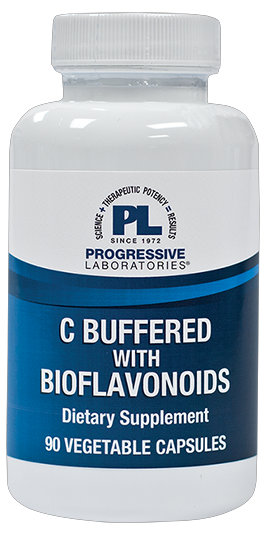
“Vitamin C” sounds interchangeable—until you try to take it day after day. Buffered Vitamin C is Vitamin C formulated to be gentler and more usable in real life: an Ascorbate/Threonate Complex paired with a Citrus Bioflavonoid Complex, selected to help support how the body absorbs and utilizes it.
Why You Should Consume Buffered Vitamin C
Because Vitamin C only helps when you can take it consistently. Buffered Vitamin C is designed to be easy to tolerate and easy to assimilate— so you can keep your daily intake steady without the stomach discomfort many people associate with harsher, more acidic forms.
And source matters. This Buffered Vitamin C is sourced from real citrus—limes and oranges— not corn-derived sources (as is common in many mass-market Vitamin C products).
Your cells can’t swallow your good intentions. They can only use what you give them—every day. So don’t ‘mean to’ get Vitamin C… make it show up.
Vitamin C may look “simple,” but it plays a foundational role in daily health. When intake is low, the body has less support for normal protection and repair. The aim isn’t excess—it’s staying consistently well supplied.
- The public has been taught from elementary school onward to think “minimum.” The body, however, lives on “supply" so it can find in the blood stream what it needs to function optimally.
- A small amount of Vitamin C may keep scurvy away — but that’s not a good modern health strategy.
- If Vitamin C is daily infrastructure, then the winning move is simple: keep the tank consistently filled—not occasionally flooded.
A Vitamin C RDA is basically the “just-get-by” number (the "don't get sick and die this year" number) — it’s the minimum amount to keep you alive, not help you feel amazing at 70, 90, or 110.
Vitamin C supports the things we care about as we age: repair, resilience, circulation, and staying active. Here are a few reasons it deserves a real spot in your day — not an afterthought.
- Inflammation makes everything feel harder — and Vitamin C can nudge that dial. In one UC Berkeley-led trial, people taking about 500 mg/day for two months saw an average 24% drop in CRP (C‑reactive protein), a common lab marker for chronic inflammation. I like that because it’s not “vibes.” It’s a number you can actually test.
- “A little more” Vitamin C was linked with “a lot better” outcomes in big population data. In a nationally representative group of 11,348 U.S. adults followed for about 10 years, the people with the highest vitamin C intake had substantially lower death rates — especially from cardiovascular causes (men: about 42% lower cardiovascular mortality; women: about 25% lower). And the best part? The “high intake” group averaged roughly ~300 mg/day. That’s not some extreme megadose lifestyle — it’s just consistently doing better than bare minimum.
- Low Vitamin C tends to show up where you really feel it: blood flow and circulation. A report in Circulation found vitamin C levels were lower in people with peripheral arterial disease, and lower levels were linked with higher CRP and greater disease severity. In other words: when circulation is struggling, vitamin C often looks like it’s running low too.
- Vitamin C isn’t just “extra” — it’s structural. Researchers used it when they were actually measuring arteries. In a classic serial-arteriography study (they took real follow‑up images of arteries over time), the treated group used 500 mg of ascorbic acid three times daily (1,500 mg/day). The authors called the early results encouraging (and yes — preliminary). But here’s the point: when you stop guessing and start measuring, vitamin C keeps showing up as a serious “repair-and-structure” nutrient.
- And here’s the frustrating part: Americans are drifting away from it. One NHANES-based analysis found vitamin C intake from foods and beverages dropped about 22.6% from 1999–2000 to 2017–2018. So while we’re trying to age well, one of the simplest daily nutrients is quietly disappearing from the modern routine.
Practical takeaway: Don’t aim for “just enough to get by.” Aim for supported, steady, and strong. Vitamin C is one of the easiest daily upgrades you can make — especially through vitamin C–rich foods. And if you choose to supplement, our Buffered Vitamin C is a mineral ascorbate form with bioflavanoids that is gentler on the stomach.
Bottom line: the minimum prevents scurvy. Smart people aim higher — for steady Vitamin C status, steady repair, and steadier health.
Nature didn’t treat Vitamin C as “optional.” Most animals in the wild manufacture it continuously inside their own bodies — day and night, without missing a dose. (That design choice is a clue: Vitamin C is meant to be a steady daily supply, not an occasional afterthought.)
- Fruit bats, guinea pigs, primate monkeys and humans are the only ones that do not make Vitamin C inside their bodies, but must eat it.
- All the rest of the animal kingdom make Vitamin C internally in order to protect themselves from pathogens, and from free radicals and toxins and to support collagen production and tissue formation. The amount of Vitamin C produced in the bodies of animals daily is equivalent to 5 grams of Vitamin C for a human adult. (Of course, that's more important for animals since so much of their food is "dirty" and needs the detoxifying power of Vitamin C.)
- An abundance of research shows that a decline levels of serum Vitamin C corresponds to aging and decline in function. That means keeping Vitamin C levels high is a primary consideration for staying youthful.
- Besides helping the immune system function at a higher level, maintaining high levels of Vitamin C is also absolutely essential to maintaining vascular integrity, normal blood sugar, ample collagen production, organ and skin health.
- Without adequate Vitamin C, tissues to not repair optimally. Since most people don't eat at least 2 grams a day (most eat less than 300 mg per day), most people are losing their health, quality of life and longevity because their bodies cannot repair themselves as fast as could otherwise occur.
- Vitamin C is important for energy. It plays an integral role in the production of cellular energy, and is essential for the proper metabolism of carbohydrates and the synthesis of fats and proteins.
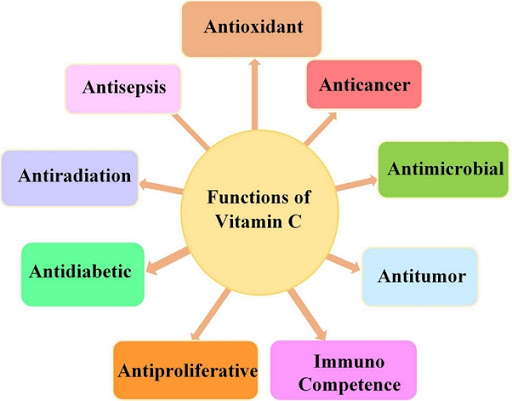
- Vitamin C is not a “nice-to-have” — it’s a daily repair nutrient. It supports healthy immune function, helps the body respond to tissue stress, and plays a role in normal cholesterol metabolism. Our Buffered Vitamin C is paired with naturally occurring citrus bioflavonoids — including rutin, hesperidin, and quercetin — because Vitamin C works better with its natural partners. Together they create a tag-team antioxidant effect that is stronger than Vitamin C alone.*
- Collagen is your body’s scaffolding — and Vitamin C helps build it. Vitamin C is essential for collagen formation and stabilization. When Vitamin C is low, collagen cross-linking can suffer — and connective tissue becomes weaker and less resilient.
- Wound healing depends on Vitamin C. Vitamin C serves as a cofactor in the synthesis of collagen and other connective-tissue components the body uses to repair skin, gums, blood vessels, and supporting structures.*
- Bioflavonoids amplify Vitamin C. Because bioflavonoids share complementary mechanisms, they can potentiate the effect of ascorbic acid.* Vitamin C and bioflavonoids both support immune function, connective tissue formation, cellular energy production, and antioxidant activity.* Many modern stressors raise the need for Vitamin C, including smoking, alcohol use, chronic stress, diabetes, environmental toxicity, and certain medications.
- Vitamin C also supports the brain. It functions as a cofactor in the synthesis of key neurotransmitters involved in focus and drive, including dopamine and norepinephrine.*
What Are Optimal Doses of Vitamin C?
There are plenty of opinions about Vitamin C — and there’s the official “minimum” meant to prevent disease conditions. But the real question isn’t minimum. It’s optimal: how much Vitamin C does your body need to stay consistently well supplied so repair, resilience, and antioxidant protection can run at full strength? That number isn’t identical for everyone. It rises with real life — infections, inflammation, stress, toxins, and chemical exposure. Some researchers have argued that in a relatively clean environment, an “optimal baseline” could look like about 500 mg every 5 hours — not because you’re sick, but because Vitamin C is used quickly and the body works best with a steady supply.
- Think of the RDA for Vitamin C like a poverty line: below which people cannot survive. It’s not a personalized target for thriving. For vitamin C that baseline is about 75–90 mg/day for most adults. However, if you want a truly vibrant life, don't think about not dying because of a lack of Vitamin C, instead think about thriving through an abundance of it. Aim higher by making vitamin C–rich foods a daily non‑negotiable, and if you choose to supplement, choose an amount thoughtfully (and responsibly) based on your body, lifestyle, and guidance—because “minimum” thinking is how people keep their health impoverished instead of choosing a best life.
- Two-time Nobel laureate Linus Pauling—one of vitamin C’s most famous champions—advocated daily intakes in the 2–10 gram (2,000–10,000 mg) range, a high-dose approach that remains debated and may not be advisable for everyone.
- Think of nature's Vitamin C benchmark: wolves and cats don’t “take” Vitamin C—they make it. Scaled to a human-sized body, that internal production as roughly 5,000 mg per day (a comparison that helps put “high-dose” numbers in context).
- Even though Vitamin C is essential to health, many people don't consume it because the acidic nature of Vitamin C can irritate sensitive stomachs. With our buffered Vitamin C, most people can get an optimum amount of Vitamin C without the fear of stomach sensitivity issues.
How Much Vitamin C is in a Capsule of Buffered Vitamin C?
- 500 mg per capsule.
Three capsules or 1,500 mg (one capsule every five hours) is the amount recommended by the manufacturer. Double that amount is occasionally taken by people who are recovering their health, and even more therapeutically. Due to the buffered nature of this product, one can consume a great many capsules with less worry about stomach sensitivity. However, at higher amounts, please check with your health professsional. Each bottle contains 90 capsules, enough to take three capsules per day for a month. Never exceed bowel or gastric tolerance (meaning if one gets diarrhea, or stomach upset, then reduce the dose).
What Are the Ingredients in Buffered Vitamin C?
- Vitamin C (as Calcium Threonate/Calcium Ascorbate Complex). This form of Vitamin C is well assimilated, releasing a small amount of calcium that buffers the stomach linings, Threonate is an active metabolite of Vitamin C and stimulates the uptake of Ascorbate (Vitamin C). This is an exciting form of Vitamin C due to its virtually complete assimilation.
- Citrus Bioflavonoid Complex: Hesperidin, Rutin, Quercetin. These other natural Vitamin C bioflavonoids additionally buffer the stomach from any sensitivity to Vitamin C ascorbate. They are powerful antioxidants and potentiate the effect of the ascorbate.
Buffered Vitamin C Ordering Form
Forever Friends Price: $24.00
Buffered Vitamin C
|
||||||||||||||||||||||||||||||
How to UseOne to three capsules daily. If taking more than one capsule, separate by 4 to 5 hours
|
Videos and Audios about Buffered Vitamin C
We disclaim any claims (if there are any) made in these videos or audios. They are for information, education, enlightenment and entertainment only.
Frequently Asked Questions About Vitamin C
Where in Their bodies Do Most Mammals Make Vitamin C?
Virtually all animals produce their own Vitamin C internally, either in the liver or kidneys via an enzyme called gulonolactone oxidase that converts blood sugar to Vitamin C (ascorbate)
Only fruit bats, guinea pigs, primate monkeys lack this enzyme and thus do not have the ability synthesize Vitamin C naturally.
What Is Unique About Our Buffered Vitamin C?
Our Buffered Vitamin C formulation is better absorbed and is buffered so that it doesn't irritate stomach linings. This is accomplished by using the latest discoveries in Vitamin C science, including bioflavonoids and a mixture of Calcium Threonate/Ascorbate, that buffer its impact on the stomach and increase absorption, utilization and retention of Vitamin C.
Does a Decline in Ability to Make Vitamin C in Animals Predict Death?
Yes! In 1983 researchers in Japan reported that Vitamin C levels in humans decline with advancing age apart from variations in dietary intake and that females maintain a higher level of Vitamin C than males at all ages, which correlates with their generally longer lifespan over males.
Researchers who studied content of Vitamin C in the bodies of animals, have concluded that the capacity to synthesize Vitamin C declines over time and is a major factor in age-related diseases in these animals.
What Studies and Scientific References Are There Regarding the Components of Buffered Vitamin C?
Threonate is a metabolite of Vitamin C that greatly enhances Calcium assimilation as well stimulating Vitamin C uptake and prolonging the retention of Vitamin C in human cells. Learn more at: Examine.com - Summary of L-Threonate
Shortened Lifespan Corresponding to Vitamin C levels
Please note that the mice involved in these tests were "bred" so that they would not produce Vitamin C in their bodies. This makes them ideal candidates for Vitamin C studies since they are more like people, IE, dependent upon Vitamin C in the diet.
- The lack of Vitamin C in SMP30 deficient mice accelerates aging and shortens lifespan
- Scientists discover new role for Vitamin C in the eye and the brain.
- SMP30 knockout mice fed a Vitamin C-deficient diet do not thrive and display symptoms of scurvy such as bone fracture, and die within 135 days if not provided Vitamin^ C in their diet. The Vitamin C in their livers and kidneys is less than 1.6% of normal mice.
- Vitamin C linked to reduced glucose levels in type 2 diabetes
- Mice that are bred to not produce much Vitamin C develop clearly visible deposits of cellular debris (lipofuscin) in their tissues. Lipofuscin is a marker of aging.
- Laboratory mice that are bred to not product much Vitamin C (called SMP30 knockout mice) they experience an increased mortality rate beginning at three months of age. Typically laboratory mice live two years, with some living a bit longer. SMP30-absent mice exhibit 3 times greater triglycerides and cholesterol in their liver tissue.
- Having optimal levels of Vitamin C naturally results in lowered blood sugar. When mice lacking the SMD30 protein were fed a standard-calorie diet and then given glucose, a simple sugar, their blood sugar levels rose by 25%.
- A complete lack of Vitamin C induces emphysema among SPM30 knockout mice. This is believed to be due to a decrease in collagen synthesis, measured to be 82% less than normal mice. Collagen production requires Vitamin C.
- In laboratory mice that do not synthesize Vitamin C, brain tissues experience 2-3 times greater production of an oxidizing free radical called superoxide. The provision of supplemental Vitamin C to these same non-SMP30-producing animals raises blood levels of Vitamin C to nearly the same concentration measured in animals that do produce Vitamin C. This suggests supplemental Vitamin C may protect brain tissues sufficiently from free radical damage.
Vitamin C is essential to immune function in numerous ways as follows:
- Vitamin C helps encourage the production of white blood cells known as lymphocytes and phagocytes, which help protect the body against infection.

- Vitamin C equips lymphocytes and phagocytes to withstand the free radical bursts that they must use to kill invading pathogens. Without the protection of Vitamin C, they would be destroyed by the act of killing an invader.
- Vitamin C produces beneficial results in regard to nearly all of the immune system's cells.
Natural killer (NK) cells. These “hit men” of the immune system move in on infectious and malignant targets that have been identified as foreign by other immune system components.- Like other immune cells, natural killer cells’ function declines with aging. Detailed scientific studies show that natural killer cell function improves in the presence of adequate Vitamin C, and declines without it.
- Vitamin C helps natural killer cells track and destroy tumor cells as well by reducing the shielding effect of platelets (blood clotting cell fragments) that would prevent NK cells from destroying them. This effect may help to prevent cancers from producing deadly metastases.
- Neutrophils are the main immune system cell for fighting bacterial infections. Neutrophils engulf invading organisms, then destroy them with powerful blasts of short-lived oxygen free radicals. Vitamin C supports many aspects of neutrophil function, aiding in their ability to chase down bacterial targets and improving their ability to engulf and kill such targets.
- Since the bacterial killing process creates potent oxidation products, neutrophils would destroy themselves in short order without ample Vitamin C, which scavenges up the dangerous oxidizing molecules once they have done their work to destroy the bacterial cell.
- A study published in the Canadian Journal of Physiology and Pharmacology showed that when human volunteers took an oral dose of 1,000 mg or more of Vitamin C, neutrophils performed more vigorously than those of unsupplemented subjects.
- Improved function of neutrophils in the presence of adequate Vitamin C is so evident that clinicians have begun to use Vitamin C at 1,000 mg per day doses for people with chronic granulomatous disease, a disorder in which neutrophils lack proper killing ability once they have ingested bacteria.
- Lymphocytes are immune system cells that produce antibodies (called B-lymphocytes) and coordinate with other immune cells to guide them towards threats needing destruction.. When they detect such an incipient threat, lymphocytes rapidly reproduce in a proliferative response that is enhanced in the presence of Vitamin C. In older adults, that proliferation is impaired, but Vitamin C treatment restores them to youthful levels of function. Similar enhancements of lymphocyte proliferation have been demonstrated by supplementing aging laboratory animals with Vitamin C, which also boosts lymphocytes’ ability to track down threats.
- Diabetes, like aging, impairs the production of lymphocytes and the functioning of T-lymphocytes. However, supplementing diabetic rats with Vitamin C pushed lymphocyte production from 57% of that of controls to virtually 100% of control values, essentially creating “non-diabetic” immune cells within a living diabetic body.
- Antibodies are non-cellular components of the immune system that help identify and destroy invading threats and cancerous cells.36 Vitamin C benefits this portion of the immune system by raising levels of three main classes of antibody immunoglobulins: IgA, which protects against infections mainly on mucosal surfaces, such as the respiratory and digestive tracts, IgG, which provides long-term protection in the bloodstream, and IgM, which is the earliest immunoglobulin to appear in blood in response to threats. Blood levels of antibodies and other protective molecules rose significantly when volunteers took 1,000 mg doses of Vitamin C daily for 75 days, demonstrating the effect in humans.
- Like other immune cells, natural killer cells’ function declines with aging. Detailed scientific studies show that natural killer cell function improves in the presence of adequate Vitamin C, and declines without it.

